
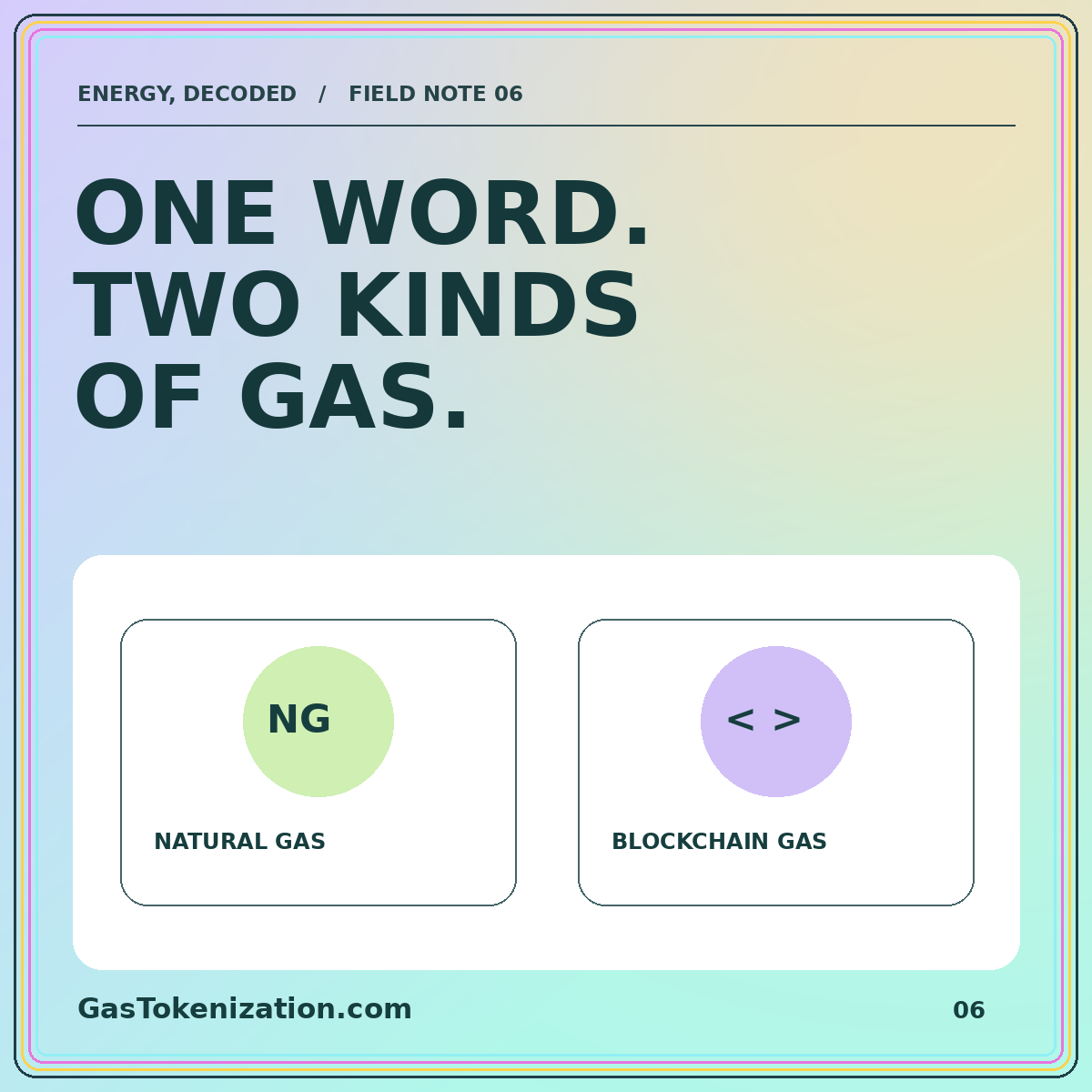
The word “gas” describes two very different things in energy and blockchain discussions. Natural gas is a physical energy commodity. On Ethereum, gas is a unit used to measure computational work. The shared word can make token descriptions confusing, especially when an energy-related project is displayed inside a cryptocurrency wallet. A clear explanation should keep the physical asset, the digital record, and the network fee separate.
This guide explains the distinction and then applies it to hypothetical gas-tokenization examples. It does not recommend a network, a wallet, or a digital asset. GasTokenization.com provides educational content about natural gas-related tokenization concepts; it does not issue a gas token, hold customer assets, or provide transaction services.
What Ethereum gas measures
The official Ethereum gas and fees documentation defines gas as a measure of the computation required to execute operations. Fees are paid in ether. Gas units measure work, while a price per gas unit helps determine the transaction fee. The word is a computing metaphor, not a statement that a transaction consumes a contractual quantity of natural gas or grants rights to an energy reserve.
Read the claim, not the label
That distinction is enough for the central comparison. You do not need to calculate a live network fee to understand the type of asset a proposed token represents. Nor does a gas-related word in a token's name prove that it has a physical commodity connection. The relevant evidence is the defined claim and its supporting documentation, not the vocabulary used by the interface.
Natural gas belongs to a different description
A natural gas-related entitlement should identify the physical or economic arrangement it concerns. In a hypothetical delivery structure, the description would include a quantity basis, location, responsible party, and conditions for performance. In a hypothetical revenue structure, it would instead define receipts, deductions, and payment rights. Neither description is supplied by the network's fee terminology.
An easy language test is to replace “gas” with a more precise phrase. Use “network computation fee” when discussing a transaction cost. Use “natural gas delivery entitlement” or another accurate claim description when discussing the proposed commodity interest. If a paragraph becomes unclear after that replacement, the original wording was probably combining ideas that should be explained separately.
Imagine three separate balances
Consider a hypothetical holder researching an energy-linked token on a blockchain. The first conceptual balance is the holder's recorded commodity-related claim. The second is any digital asset used for paying a transaction fee. The third could be a currency amount used to settle a purchase or redemption. These are separate roles, even if an interface happens to show them on the same screen.
For the example holder, owning a commodity-related token would not automatically explain how network fees are paid. Likewise, holding a network's native asset would not establish any right to natural gas. The project documents should state which asset serves each role. Keeping the roles separate prevents a fee requirement from being mistaken for an additional purchase of the underlying commodity.
A wallet display is not a rights document
An interface may show a name, symbol, quantity, and image for a digital record. Those display elements are helpful for navigation but incomplete for evaluating an energy claim. In a hypothetical research process, compare the displayed identifier with the identifier in the responsible party's documentation. Then read the actual rights, restrictions, and settlement terms rather than treating recognition by the interface as verification.
Our tokenized gas overview is organized around those underlying claim types. The important questions are who owes performance, what performance consists of, and what evidence supports the relationship. A familiar wallet brand can help a user interact with software, but its logo should never substitute for answers to those questions or imply an endorsement from this website.
Distinguish three kinds of cost
A hypothetical token arrangement could involve physical commodity costs, administration charges, and blockchain transaction fees. Keep those categories in separate rows of a cost worksheet. Ask which costs are included in a quoted amount and which are paid later. A project that highlights only a low network fee may leave most of the arrangement's costs unexplained.
For example, imagine that moving a digital record has a small network cost while exercising the underlying delivery right requires additional handling arrangements. A cheap transfer would not make delivery free. Conversely, a high transaction fee would not establish that the commodity itself had become more valuable. The research question is which action each charge pays for and which party receives it.
Do not infer commodity exposure from a name
A name containing “gas,” “energy,” or “fuel” is not enough to classify a digital asset. A proposed token could be related to a platform function, a commodity claim, a price reference, or something else entirely. Begin with the definition provided in its governing materials and check whether the rest of the description stays consistent with that definition.
One useful exercise is to remove the logo and token symbol from a project summary. Can you still describe the holder's right accurately? If not, the summary may be relying on branding to carry information that belongs in the documents. The guide to reserves, inventory, and revenue rights provides a vocabulary for replacing broad asset labels with more precise descriptions.
Read a hypothetical transaction in stages
Suppose an example system records a transfer of a natural gas-related entitlement. First, identify the intended commercial action and its approval requirements. Second, identify the digital action used to record it. Third, identify the fee mechanism. Finally, determine whether the commercial register or responsible party must perform an additional step before the recipient's claim is effective.
This staged explanation is more useful than saying “the gas moved.” In the hypothetical example, no physical fuel needs to move merely because a digital balance changes. The parties might be recording a change in who holds a specified right. The actual documents must explain whether that interpretation is correct and what happens if the digital action and the commercial process do not finish together.
Keep technical research scoped to the implementation
Once the claim is understood, technical questions become more focused. Ask which network and record system the proposal actually uses, what actions the holder is expected to take, and what recovery procedures exist. Avoid assuming that instructions written for one implementation apply to another. The same energy-related description could be represented through different technical arrangements.
This guide deliberately does not provide a live fee estimate or a transaction walkthrough. Those depend on current implementation details and can change. The durable lesson is conceptual: identify the claim, identify the network action, and identify the fee separately. Our smart contract controls article explores how permissions and record changes can be reviewed without confusing them with physical backing.
Explain the distinction to another reader
A short explanation can prevent a long misunderstanding: natural gas is the commodity; a token may record a specified claim related to it; blockchain gas is a computation measure used in a network's fee system. Then add the important limitation: a proposed claim still needs documentary and operational support. The technology terms do not establish that support by themselves.
When reviewing an article or project presentation, look for sentences that switch between these meanings without warning. Ask the author to clarify which one applies. Precise language is particularly important in headings and diagrams, because readers may see those without reading every qualification. The same care should apply to metadata and social cards used to share educational material.
Conclusion: one word, separate systems
Natural gas and blockchain gas should never be treated as interchangeable assets or units. One concerns an energy commodity; the other concerns computation within a network. A natural gas-related token, where clearly defined, adds a separate record of a specified right. Understanding all three concepts makes it easier to read proposals without being misled by overlapping terminology.
Return to the gas tokenization fundamentals page for the broader framework, or visit the glossary for plain-language definitions. This website does not ask readers to connect a wallet or buy an asset. For any real arrangement, seek current, qualified advice about the actual instrument rather than relying on its name.


