
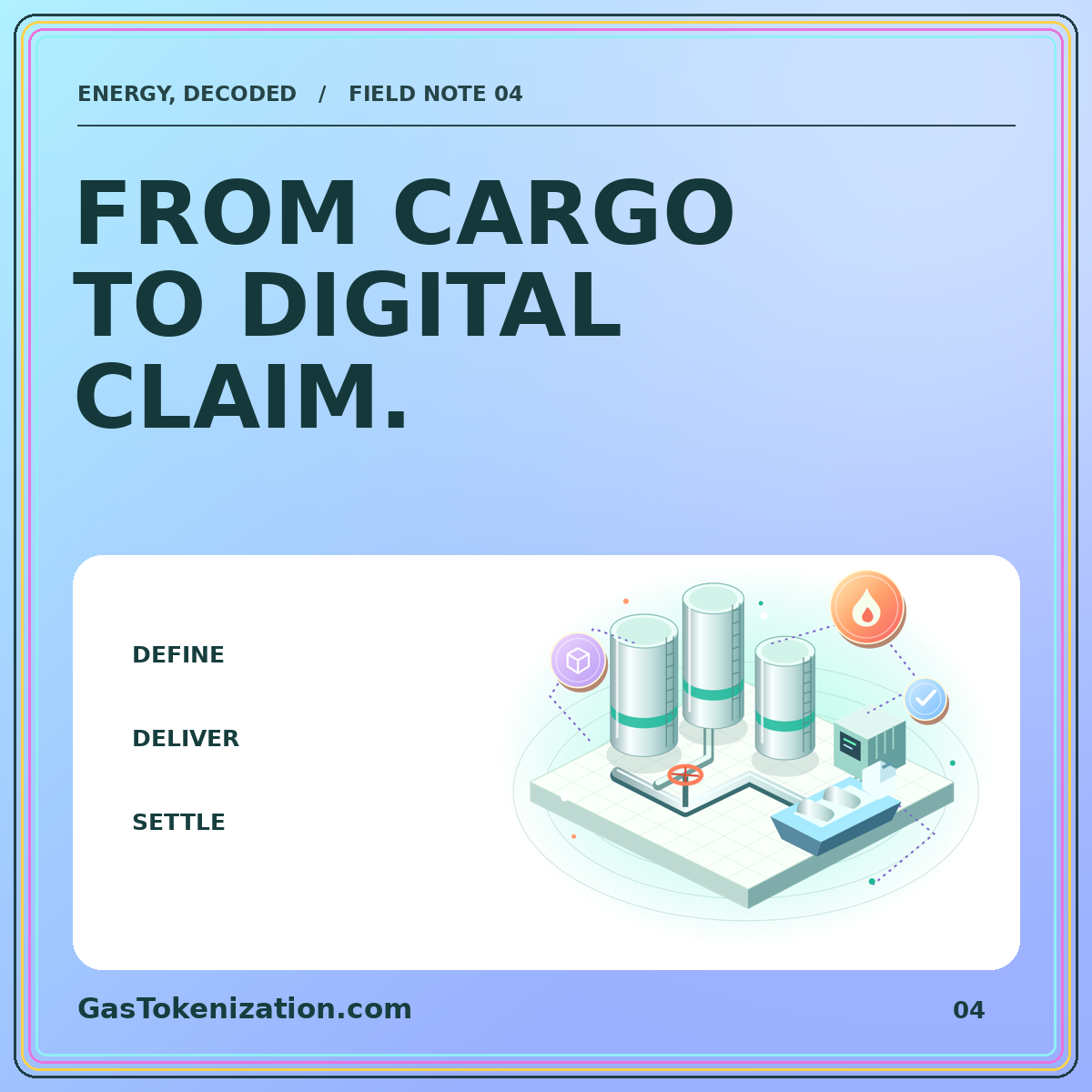
LNG tokenization is easiest to understand as a records-and-obligations problem. A cargo has a physical journey, a set of commercial arrangements, and a trail of documents. A proposed digital token may represent a particular right within that process, but it should not be confused with the entire cargo lifecycle. The first task is to identify precisely which obligation the token is supposed to record.
This article follows a hypothetical LNG-related claim from its definition to its eventual settlement. The workflow is a design exercise rather than a description of a live platform. It highlights questions for researchers, commercial teams, and readers who want to understand how a digital representation could interact with physical energy logistics without assuming that software removes operational complexity.
Understand the physical transformation
The U.S. Energy Information Administration's LNG explainer describes natural gas cooled to approximately minus 260 degrees Fahrenheit for shipping and storage. Liquefaction reduces its volume to roughly one six-hundredth of the gaseous volume. At an import terminal, LNG may be stored and then regasified before pipeline transport. Those physical stages remain relevant regardless of how associated rights are recorded.
Locate the right in the physical chain
For the hypothetical token, name the point in that chain where the claim applies. It might concern a defined delivery obligation or a financial entitlement associated with an identified shipment. Avoid drawing a token next to a ship and assuming the picture establishes cargo ownership. A useful diagram names both the physical stage and the precise right represented at that stage.
Write a complete cargo-linked description
Begin with identifiers. In the example research file, record the named parties, shipment reference, relevant delivery location, specified quantity basis, and period. Identify the documents that define the obligation and explain how later amendments are incorporated. If the proposal uses a pooled entitlement rather than an identified cargo, that difference should be explicit from the beginning.
Then ask what would make the description incomplete or outdated. A changed delivery window, revised quantity, or substituted shipment may require a corresponding update to the record. The workflow should say who can authorize that update and whether holders must consent. The goal is not to freeze every operational detail forever; it is to preserve a clear account of what the holder is entitled to at each stage.
Map the documents before adding automation
Create a document map that distinguishes commercial terms, operational records, measurement evidence, and payment instructions. Each item should have a responsible party, an effective date, and a way to identify the version being used. In a proposed token system, a reference or file fingerprint could connect the digital record to a document, but readers still need access to the underlying content they are entitled to review.
A sensible design question is which disagreements the map can help resolve. If two parties report different quantities, the system should identify the agreed measurement process rather than simply display whichever number arrived first. If a document is corrected, the previous version should remain traceable. A complete audit trail is more useful than a collection of unconnected uploads with similar filenames.
Define issuance conditions
Before the example token is issued, ask which event makes the claim eligible for representation. Is issuance tied to an executed agreement, confirmed allocation, or another documented milestone? The responsible reviewer should be identified, and the evidence supporting the decision should be retained. A proposal should not leave issuance authority as an unexplained technical privilege held by an unnamed administrator.
Next, specify the maximum claim that can be created from the approved record. This is a control question: what prevents the same obligation from supporting additional claims that were not intended? The answer may involve reconciliations and approvals outside the token software. The reserve verification hub discusses similar evidence-management principles, while recognizing that cargo documentation and underground reserve estimates are different subjects.
Distinguish a transfer from physical performance
A token transfer could occur while the example cargo remains in transit. The research question is whether the transfer changes the holder of the commercial entitlement, merely updates a secondary record, or requires further approval to become effective. The governing documents should connect those steps. An on-screen confirmation is not a complete explanation of the commercial consequences.
The recipient should also be able to see the current status of the obligation and any relevant restrictions. A proposed transfer process that conceals an unresolved delivery issue would create an information problem even if the balance update works perfectly. Review how notices reach recipients and how the system records that the applicable terms were available before a transfer was accepted.
Design around exceptions, not only arrivals
Consider a hypothetical delayed arrival. Which obligations continue, which deadlines move, and which party communicates the revised schedule? Now consider a disagreement over measurement at the destination. Ask whether the token remains transferable while the dispute is open and how any affected amount is identified. A useful operating procedure makes these states visible instead of treating every cargo as either complete or incomplete.
The same exercise should cover unavailable data, incorrect document references, and a party unable to perform. For each event, identify the accountable team, required evidence, and allowed actions. Do not assume that one broad “pause” control solves every problem. A pause may stop digital movement without resolving the underlying delivery or payment obligation.
Reconcile settlement and retirement
In the example structure, settlement might involve physical delivery, a defined payment, or another agreed completion event. The process should say exactly when the token is locked, when the obligation is considered satisfied, and when the claim is retired. These steps should be coordinated so that a holder is not left with neither an effective claim nor the promised performance.
Consider what happens when only part of an obligation is completed. Does the system reduce the claim, create a residual record, or follow another documented method? The answer should be understandable from the holder's perspective. A software event name such as “burn” is not enough; the documentation must explain what that event means for the remaining rights and any unresolved amount.
Evaluate the business case honestly
A proposed LNG records system might aim to reduce repeated reconciliation or make document status easier to inspect. Test those objectives against the existing process. Count the time required for ordinary handling and for exceptions. Include the work needed to keep the digital representation consistent with commercial and operational records, rather than treating that work as free.
A pilot should also identify what is deliberately out of scope. For example, it might test document versioning without testing payment settlement or ownership transfer. That limited result could still be useful, but it should not be described as proof that the full cargo process has been automated. Clear boundaries help readers distinguish a demonstrated workflow from an ambitious future plan.
Keep the user-facing explanation precise
A homepage or token description should use the same claim type as the detailed terms. If the hypothetical system records a delivery entitlement, call it that rather than promising ownership of an entire vessel's contents. If it only provides a document registry, explain the registry function. Accurate language makes the project easier to assess and prevents the design from suggesting functionality it does not provide.
For broader context, compare the oil and gas commodity overview with the tokenized gas rights guide. These resources help separate the physical commodity, commercial obligation, and digital record. They do not establish that a proposed cargo-linked instrument is legally enforceable or operationally practical in a specific market.
Conclusion: follow the obligation through the journey
The most useful LNG tokenization diagram is one that follows an identified right through changing documents, operational milestones, transfers, and completion. It should make uncertainty easier to see rather than hide it behind a blockchain animation. The physical journey and the records journey need a clearly documented relationship.
Before interpreting any real proposal as an investment or a usable delivery arrangement, obtain qualified advice and examine its specific documents. A careful design can improve the questions being asked; it cannot guarantee performance. Continue with our energy blockchain guide to explore how data feeds and digital controls fit into this wider process.


